7 Reasons Women Over 55 Are Giving Up Calcium Tablets For Goat Milk Powder
Have you taken your calcium every morning for years, exactly as your GP told you, and still watched your last bone scan move the wrong way? That is not carelessness. It is not a question of trying harder. The tablet was giving you calcium in a form your body could barely use, and almost nobody ever explains that part.
See Today's Offer →
You Took Your Calcium Every Day. Nobody Asked Where It Went.
The tablet went down with your tea. The letter still came back: your bone density had slipped again.
At the surgery, this stays unsaid. A standard calcium tablet is calcium carbonate, essentially ground limestone. Your body absorbs somewhere between a fifth and a quarter of it. The rest passes straight through, whatever it was meant to do left undone.
So the real question was never how much calcium you swallowed. It was how much of it your body could actually use, and where the rest went instead.
Calcium Cannot Build Bone On Its Own. It Never Could.
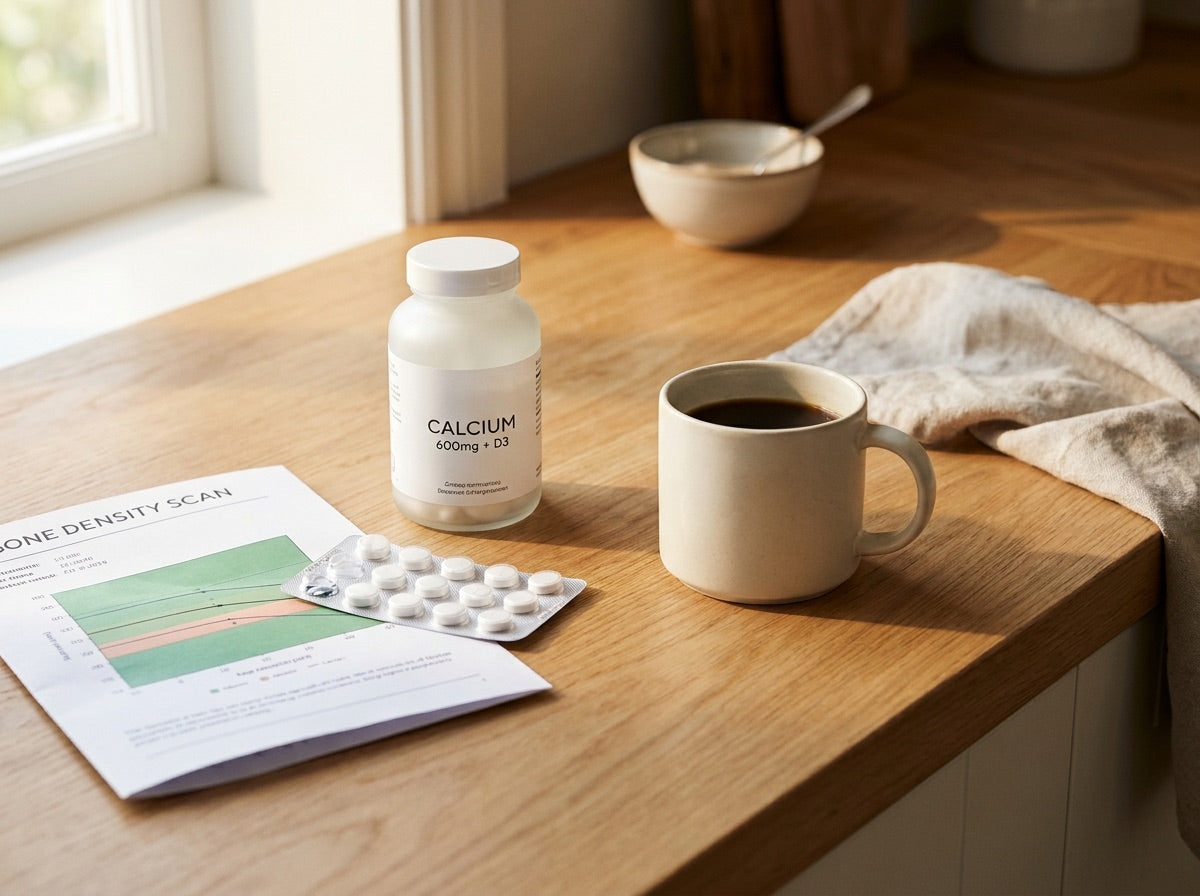
Bone is not made from a single mineral. It needs phosphorus and magnesium to move calcium into place, and vitamin K2 to act like a signpost, sending it toward your skeleton instead of your arteries.
A calcium tablet gives you the mineral on its own, with none of that team included. Goat milk gives you calcium already travelling with phosphorus, magnesium and K2, in the ratio it naturally comes in, because that is how your body has always recognised it.
Take away the signpost and extra calcium has nowhere confirmed to go. The missing piece was never more calcium. It was the team around it. So what else might actually give you that?
Five Other Things You Could Try First. Here Is What Happens.
Before you spend anything on this, it is worth knowing what actually happens with the things already within reach: the tablet pot, the fridge, the milk in the door, the chemist shelf, even another website. Start with the tablet pot.
Taking a second tablet, or a bigger one, feels like the obvious answer. It is not. Your body absorbs the same fifth to a quarter of calcium carbonate no matter how much of it you swallow, so doubling the tablet mostly doubles what passes straight through.
More cheese with lunch, an extra yoghurt, a glass of milk at bedtime. Plenty of women try exactly this, some for months, only for the next letter to show the same number as the last one. More dairy still means calcium without its team, so the ceiling does not move just because the plate is fuller.
An extra glass or two of semi-skimmed seems the obvious safe choice, and it will not do any harm. It will also not do much good. Semi-skimmed and skimmed milk have had the fat taken out at the dairy, and vitamin K2 leaves with that fat, the same part that tells your calcium where to go.
Goat milk powder is not automatically the same product twice. What matters is how it was dried, and a cheap tub bought online rarely says. Dry it too hot to save money and it loses the same fat-soluble part that skimmed milk is missing, the part that decides where your calcium actually goes.
This is the one that gets closest, and it still falls short. A K2 tablet only decides where calcium goes. It does nothing for how little of a calcium carbonate tablet gets absorbed in the first place. You are still starting from that same fifth or quarter, now with a second bottle, a second dose, and two pills that were never designed to work as one thing.
Which leaves one option that has not been tried yet: calcium that already arrives with its team attached, in the ratio your body was built to recognise. That is today's offer, just below.
Today's offer: up to 61% off
Free UK delivery on every pouch. No customs charges, ever.
One Scoop In Your Tea Replaces Thirty Minutes Of Waiting
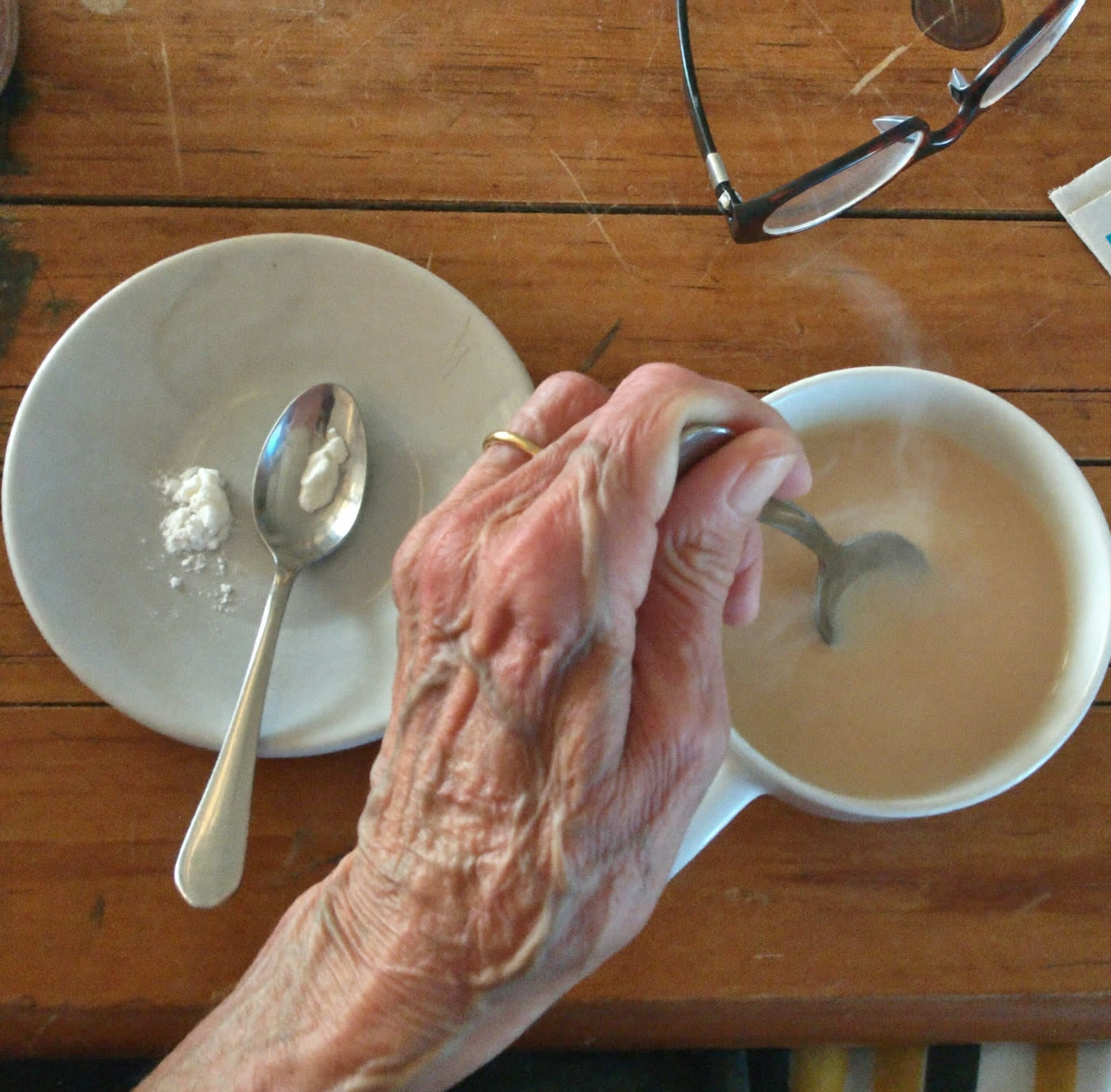
Most calcium tablets come with rules. Take it upright. Wait thirty minutes before breakfast. Do not lie back down. Women describe getting fidgety on a Saturday morning, watching the clock because the leaflet told them to.
There is none of that here. One scoop stirred into your morning tea, your porridge or a glass of milk, and the routine is finished before the kettle has properly cooled. It tastes like milk, because it is milk, simply dried at a low temperature so nothing important gets lost along the way.
That matters more than it sounds. It is the same reason semi-skimmed never quite closes the gap: skim off the fat and the K2 that decides where your calcium is heading goes with it. And that is before you even get to how it compares with cow's milk.
Even Compared To Cow's Milk, Goat Milk Calcium Absorbs Better
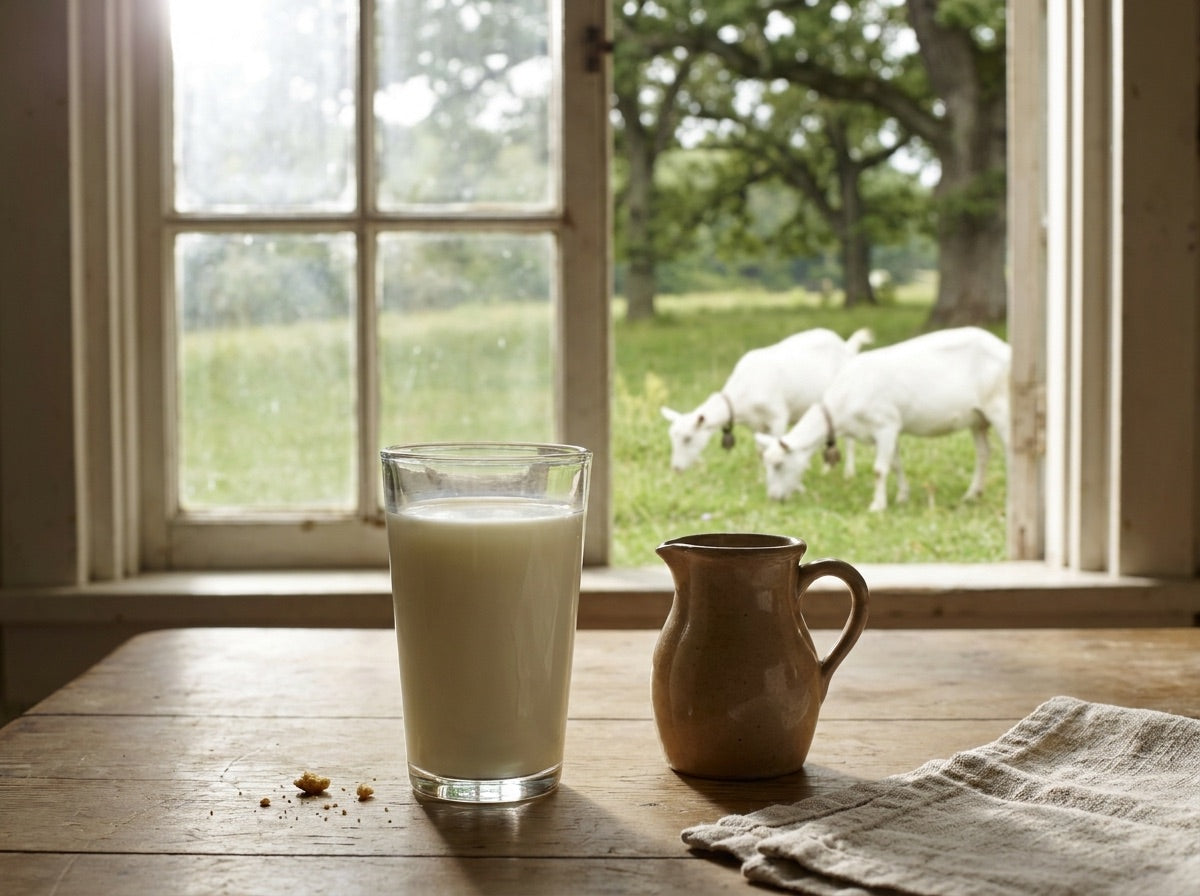
Goat milk is not simply a gentler version of cow's milk. Its calcium sits in a different mineral matrix, one that your body absorbs at a noticeably higher rate. Independent comparisons put it at around twenty five to thirty five percent better absorbed than the calcium in cow's milk.
That is before you get to what is in the bag. Turn most bone supplements over and the label runs to twenty ingredients: anti caking agents, sweeteners, fillers, with the calcium carbonate buried somewhere near the bottom. Turn this one over and there is one line. Goat milk from Dutch pasture herds, dried, and nothing else.
One ingredient, absorbed better, nothing to hide on the label.
If You Have Ever Typed One Of These Sentences, You Are Not Alone
These are women in British forums, talking to each other rather than to anybody selling them something. Not Goatly customers. Just the sentences that come round again and again.
“My husband mentioned it again last week. That I seem to be getting shorter.”
On being told by the person who sees you every day“I keep a chair by the wardrobe now, just to reach the top shelf.”
On losing height, and keeping a chair by the wardrobe“The tablets left my stomach so unsettled, I quietly stopped taking them.”
On the side effect nobody warns you about at the chemist“I looked into it myself, and chose not to go anywhere near it.”
On researching it herself, because nobody else fully explained it“The garden got left to itself. My walking boots stayed by the door.”
On the fear that shrinks a life before anything even breaks“I took my calcium every single day for years, and my bones got worse anyway.”
On years of doing everything right, and the scan that disagreedRead enough of these and one thing becomes obvious. Every one of these women did something. They took the tablet every morning. They kept the appointments. They followed the advice exactly as it was given to them, for years on end.
What almost none of them were ever asked was the second question. Not how much calcium are you taking, but where does it go once you have swallowed it. Nobody at the surgery mentioned that part, or said it was the part that mattered most.
That is the only thing that changes here. Not how careful you were, not how much you cared. Just the destination the calcium was always meant to reach.
The Next Six Months, Not Just The Next Scan
You have been told before that something would help, then waited months for a scan to say whether it actually had. That is a long stretch to spend only hoping, with nothing to show for it in between.
This time there is something to notice before any scan comes round. Within the first couple of weeks, it tends to be the mornings that change first. The tablet ritual is gone. Your stomach stays out of it. Breakfast is just breakfast again.
By six to eight weeks, it is the ordinary movements that start coming back without you deciding to try them again: reaching the top shelf without pulling a chair over first, the stairs without stopping halfway, standing at the hob long enough to actually finish cooking.
By the time your ninety days are up, it is usually the things you had quietly stopped doing that come back into the diary. The garden. The walk to the shops instead of the car. An afternoon on the floor with the grandchildren instead of watching from the chair. None of that shows up on a scan. All of it is the actual reason you started.
The next scan will come whenever yours is due, six months for some women, longer for others. Either way, this time you walk in with something to show for the wait, instead of only more hoping.